
Since its first industrial application in China in the late 1950s, electromagnetic flowmeters have been rapidly used and developed in flow measurement in the 1970s and 1980s. The working principle of an electromagnetic flowmeter is based on Faraday's law of electromagnetic induction, which states that the measured medium flows perpendicular to the direction of magnetic field lines, thus generating an induced electromotive force EX in a direction perpendicular to both the medium flow and magnetic field lines. When the magnetic field strength B and the distance d between the two poles are constant, the induced electromotive force EX is proportional to the flow rate (velocity) of the measured medium.
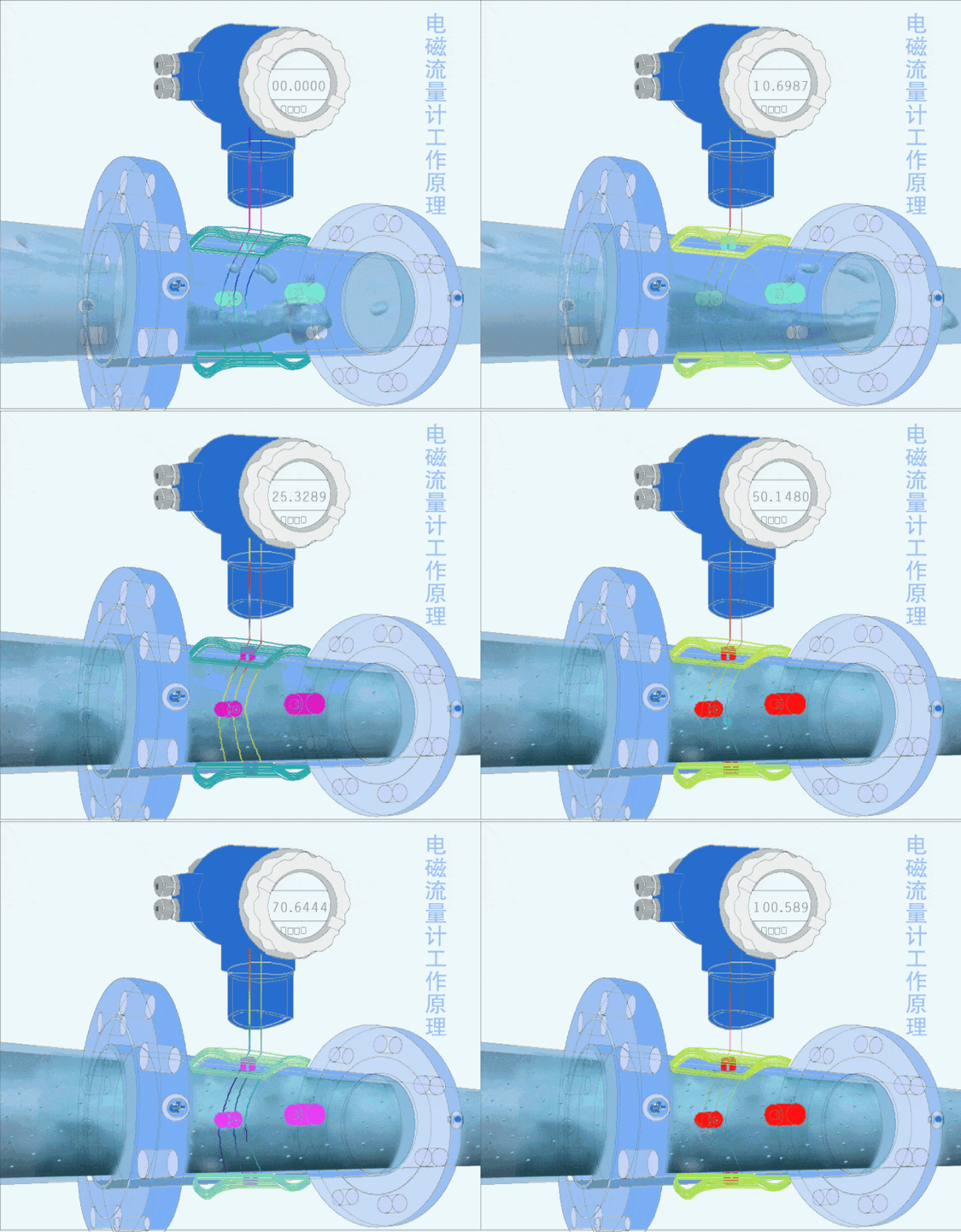
Electromagnetic flow meters are not affected by external factors such as temperature, pressure, viscosity, and weight, and there is no pressure loss caused by shrinkage or protrusion inside the measuring tube. In addition, the initial signal detected by the flow element is a voltage that varies linearly with the average flow velocity of the fluid, which is independent of other properties of the fluid and has great advantages. According to the characteristics of large flow rate changes, impurities, low corrosiveness, and certain conductivity of sewage, electromagnetic flowmeter is a good choice for measuring the flow rate of sewage. It has a compact structure, small volume, and is easy to install, operate, and maintain. If the measurement system adopts intelligent design, the overall sealing is strengthened, and it can work normally in harsh environments.
Flow rate: The quantity of fluid flowing through a cross-section in a unit of time. Depending on the calculation method, flow rate can be divided into:
Volume flow rate (V): When a fluid is expressed in volume, it is called volume flow rate.
Mass flow rate (m): When a fluid is expressed in mass, it is called mass flow rate.
Instantaneous flow rate: the flow rate of fluid flowing through a pipeline per unit time. (t/h)
Cumulative flow rate: The flow rate of fluid flowing through a pipeline during a certain period of time. (t)
Bidirectional measurement system.
The straight pipe section required for the sensor is relatively short, with a length of 5 times the diameter of the pipeline.
Low pressure loss.
Measurement is not affected by changes in fluid density, viscosity, temperature, pressure, and conductivity.
Mainly used in sewage treatment.
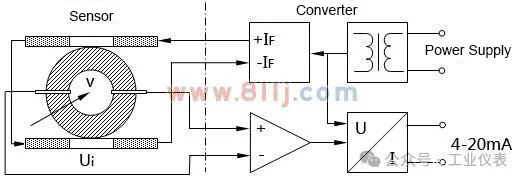
Measurement requirements: Clearly define the flow range to be measured, accuracy requirements, and characteristics of the measuring medium, such as conductivity, corrosiveness, temperature, pressure, etc. These pieces of information will help in selecting the appropriate electromagnetic flowmeter model and specifications.
Pipeline conditions: Consider the material, inner diameter, flow velocity, and the presence of obstacles such as bends and valves in the pipeline. These factors will affect the measurement accuracy and stability of the flowmeter.
Environmental factors: Consider the environmental conditions of the installation location, such as temperature, humidity, electromagnetic interference, etc. These factors may affect the performance of the flowmeter, and it is necessary to choose an electromagnetic flowmeter with strong adaptability and good stability.
Economy: Choose cost-effective electromagnetic flow meters based on budget and long-term operating costs. At the same time, the service life and maintenance cost of the flowmeter should be considered to ensure long-term stable operation.
Notes:
The measured liquid must be a conductive liquid or slurry;
The diameter and range, preferably exceeding half of the full range (usually 4-8 times the normal flow rate), and a flow rate between 2-4m/s;
The pressure used must be lower than the pressure resistance of the flow meter.
Different lining materials and electrode materials are selected for different temperatures and corrosive medium.
There are no throttling components, so the pressure loss is small. Not affected by the temperature, pressure, density, and viscosity of the fluid.
Only related to the average velocity of the measured fluid, with a wide measurement range.
After being calibrated with water, other medium can be measured without correction, making it the most suitable measuring equipment for settlement.
Electromagnetic flow meters cannot be used to measure gases, vapors, and liquids containing a large amount of gas, cannot be used to measure liquid media with low electrolysis rates, and cannot measure high-temperature and high-pressure fluids.
The installation and debugging of electromagnetic flow meters are more complex and require stricter requirements than other flow meters.
When measuring viscous liquids with dirt, sticky substances or sediment adhere to the inner wall of the measuring tube or electrode, causing a change in the output potential of the transmitter and resulting in measurement errors. When the dirt on the electrode reaches a certain thickness, it may cause the instrument to fail to measure.
industrial automation
water conservancy project
Environmental testing
Energy metering
Reprinted from official account: industrial instrument
Mega-tek Instrument Classroom