
In industrial production, reliable monitoring and control measures ensure the smooth progress of processes and safe production. Magnetostrictive level gauge, magnetic floating ball level gauge, reed switch... These terms may seem a bit confusing. When selecting, some people believe that magnetostrictive level gauge, magnetic floating ball level gauge, and reed switch are all the same thing, which is a misconception!
Magnetostrictive level gauge and magnetic float level gauge are two common liquid level measurement devices. Although they both use buoyancy and magnetic induction principles, they are not the same device. In this issue, we will delve into the working principle, structure, and function to help you clarify your choices, avoid selection errors, and ensure smooth industrial production.
01
Different structures
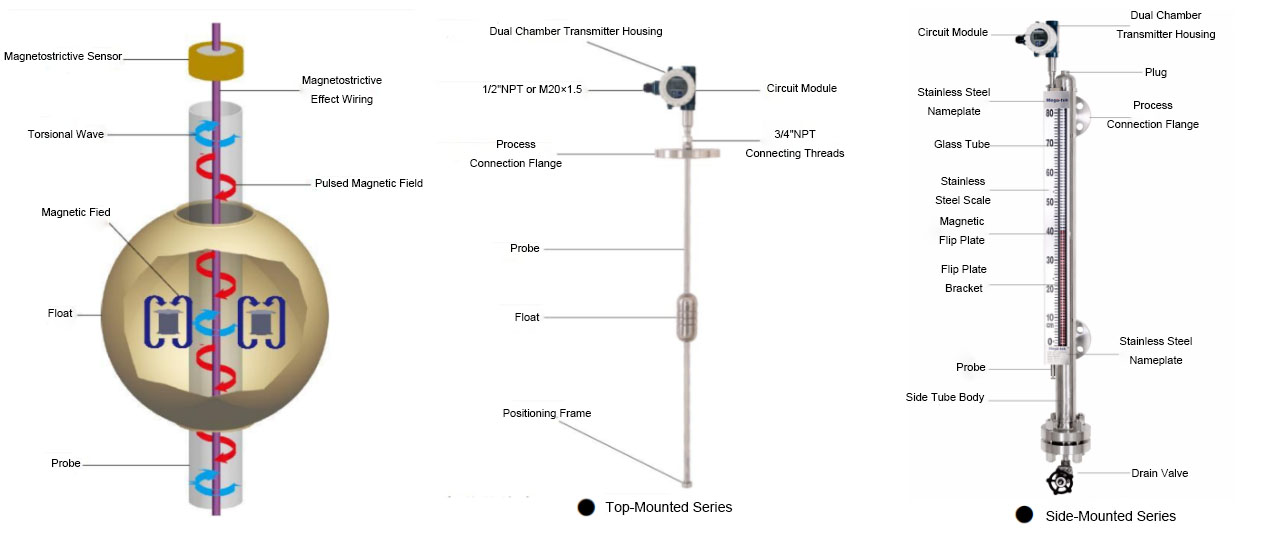
The basic structure of magnetostrictive level gauge consists of three parts: probe rod, electrical sensing element, and float. Its structure avoids damage to internal parts during transportation, with a far magnetic distance of 45mm. It can adopt high-temperature isolation measures and can be reliably applied at high temperatures.
The circuit board of magnetic float level gauge generally has two structures. Due to structural reasons, it cannot be used in high temperature conditions and is prone to damage.
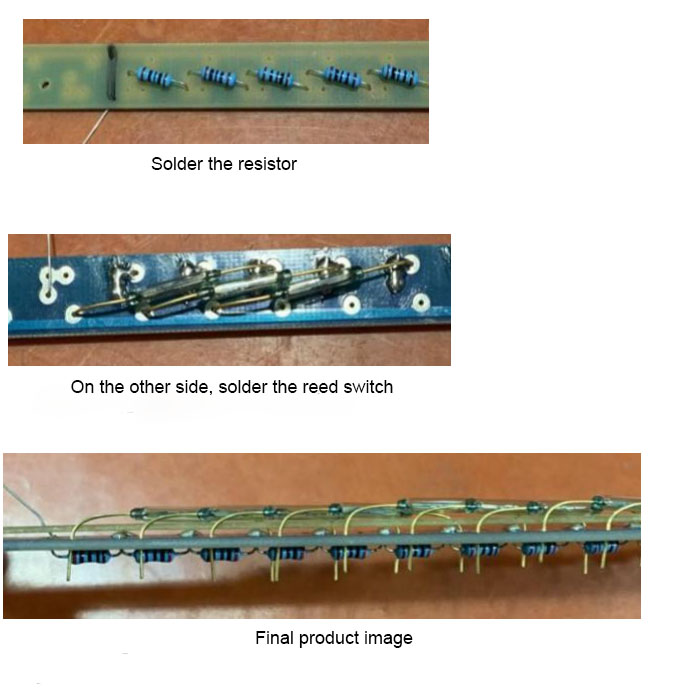
The external glass tube seal of the reed switch is prone to breakage and requires high transportation and installation requirements. The reed switch suffers from mechanical fatigue, causing the reed to lose its function and leading to accidents.
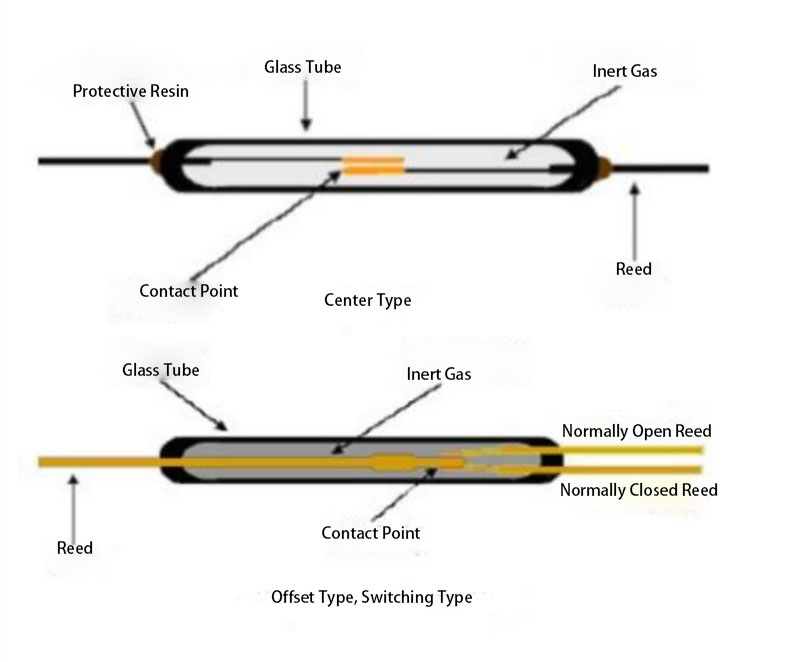
Structural diagram of reed switch
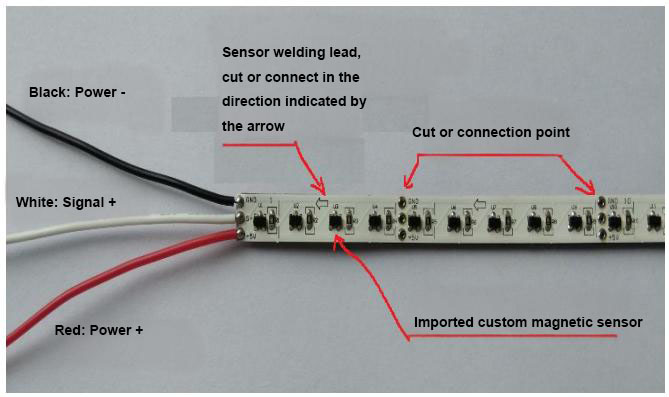
Compared to the sealed glass tube on the outside of the reed switch, this structure is less likely to be damaged during transportation and installation, but it is not resistant to high temperatures.
02
The sensor probe of the magnetostrictive level gauge is equipped with a float outside, which can move up and down along the probe with the change of liquid level. There is a set of permanent magnetic steel inside the float. When the magnetic field generated by the pulse current meets the magnetic field of the float, the magnetic field around the float changes, causing the waveguide wire made of magnetostrictive material to generate a torsional wave pulse at the position of the float. This pulse is transmitted back along the waveguide wire at a fixed speed and detected by the detection mechanism. The position of the float, i.e. the liquid level, can be accurately determined by measuring the time difference between the pulse current and the torsional wave.
The guiding detection tube of the level transmitter of the magnetic float level gauge is equipped with multiple parallel reed switches and multiple series precision resistors. When the magnetic float outside the detection tube changes synchronously with the liquid level, the reed switch located at the liquid level inside the detection tube is coupled by the magnetic field and sequentially connected, causing a change in the resistance value of the series connection inside the detection tube. Convert its resistance changes into 4-20mA analog signals and HART protocol digital signals through intelligent modules for output.
A reed switch is a magnetic switch. When an external magnetic field approaches, the metal spring will be magnetized to produce magnetic fields of different polarities. When the magnetic force generated by the magnetic field strength overcomes the spring force of the spring, the two spring plates will be attracted and the circuit will conduct. When the magnetic field weakens or disappears, the spring demagnetizes and the circuit is disconnected under the action of elastic force.
03
Magnetostrictive level gauges are commonly used in applications that require high precision and stability, such as liquid level monitoring in chemical production processes.
Magnetic float level gauge is suitable for general level measurement, such as level monitoring in storage tanks, containers and other equipment.
When choosing a level gauge, it is important to clarify that magnetostrictive level gauges, magnetic float level gauges, and reed switches are not the same device to avoid misunderstandings. Choosing the appropriate level gauge can effectively improve monitoring accuracy and production efficiency. When selecting, factors such as accuracy, application scenarios, and cost should be comprehensively considered based on specific needs to ensure the selection of the most suitable level gauge equipment.
Reprint official account: instrument circle
Mega-tek Instrument Classroom