
Differential pressure flowmeter, as a classic and oldest flowmeter, has the widest range of applications. However, with the rise of electronic flow meters such as electromagnetic and vortex flow meters, some of our new industry friends may not be familiar with this type of flow meter. In today's issue, we will explain this differential pressure flow meter to you in detail.
Differential pressure flowmeter is widely used in chemical production and is also the most familiar flowmeter for operators. Its throttling device (1) is installed on the production process pipeline (2) and consists of three parts: the pressure pipe (3) and the differential pressure transmitter (4) to form a flow measurement system (as shown in Figure 3-1). Below are introductions to the installation of differential pressure flow meters, differential pressure transmitters, and differential pressure flow meters.
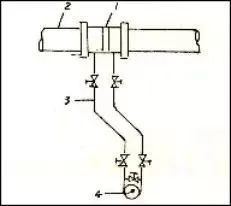
Figure 3-1 Composition of Differential Pressure Flow Meter
Differential pressure (also known as throttling) flowmeter is based on the throttling principle of fluid flow, using the pressure difference generated when the fluid passes through the throttling device to achieve flow measurement. Differential pressure flow meters are generally composed of throttling devices (orifice plates, nozzles) that can convert fluid flow into differential pressure signals, differential pressure gauges or transmitters used to measure pressure differences, and display instruments.
This type of flowmeter is currently widely used in the chemical, refining, and other industries, with a long history of application. Therefore, it has accumulated rich practical experience and complete experimental data. For commonly used orifice plates, nozzles, and other throttling devices, they have been standardized both domestically and internationally and are referred to as "standard throttling devices". Therefore, the standard throttling device used in this flowmeter can be directly manufactured and used based on the calculation results, without the need for separate calibration using experimental methods. However, for non standardized special throttling devices, individual calibration should be performed during use.
1、 Flow measurement principle of throttling device
Throttle phenomenon and its principle:
When fluid flows in a pipeline with a throttling device, the phenomenon of the difference in static pressure of the fluid at the pipe wall before and after the throttling device is called throttling phenomenon, as shown in Figure 3-2
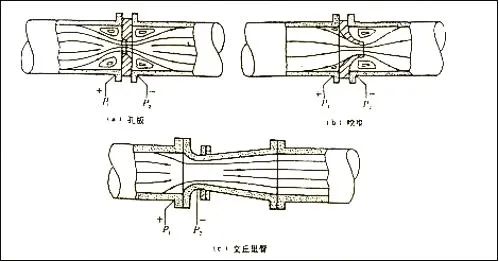
Figure 3-2 Throttling phenomenon when fluid flows through a throttling device
Now, we will further analyze the changes in fluid flow before and after passing through the throttling device.
When a continuously flowing fluid encounters a throttling device inserted into a pipeline, the cross-sectional area of the throttling device is smaller than that of the pipeline, resulting in a sudden reduction in the fluid flow area. Under pressure, the fluid flow velocity increases, squeezing the throttling hole and causing an expansion and decrease in flow velocity. At the same time, there is a difference in the fluid static pressure at the pipe wall before and after the throttling device, forming a static pressure difference △ p (△ p=P1-P2), as shown in Figure 3-3. And p1>p2
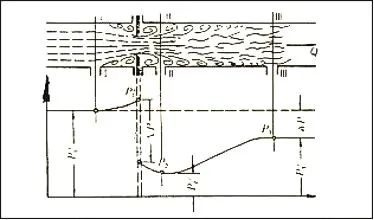
Figure 3-3 Flow and pressure distribution near the orifice plate
This is the phenomenon of throttling, as can be seen from the figure, the function of the throttling device is to cause local contraction of the flow beam, resulting in a pressure difference. And the larger the flow rate, the greater the pressure difference generated before and after the throttling device, so the size of fluid flow can be measured by measuring the pressure difference. Due to the contraction of the flow beam caused by the throttling device, while the fluid remains in a continuous flow state, the flow velocity reaches its maximum at the minimum cross-sectional area of the flow beam, and the static pressure of the fluid is lowest at the minimum cross-sectional area of the flow velocity.
Similarly, at the outlet end face of the orifice plate, due to the increased flow velocity, the static pressure is still lower than before (i.e. P2<p1 in the figure). Therefore, the static pressure p1 on the inlet side of the throttling device is greater than the static pressure p2 measured at its outlet. The former is called positive pressure, often marked with "+", while the latter is called negative pressure, marked with "-". Moreover, the larger the flow rate q, the more significant the local contraction and potential energy of the flow beam, and the more significant the conversion of kinetic energy. This is the principle of throttling<= "" p="">
2、Standard throttling device
Standard throttling devices include orifice plates (left in the figure below), nozzles, and Venturi tubes (right in the figure below), among which orifice plates are the most widely used.
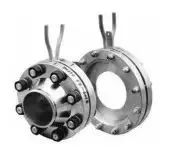
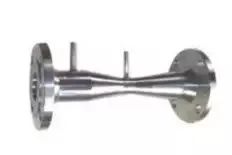
We will give a brief introduction to the most widely used throttling device - orifice plate.
Structure of orifice plate
The standard orifice plate is a circular metal plate with a central opening, and the opening edge is very sharp and concentric with the pipeline axis. It is used for standard orifice plates with different inner diameters of pipelines. Its structural form is basically geometrically similar, as shown in Figure 3-4. The standard orifice plate is rotationally symmetrical, and the line connecting any two points on the upstream orifice plate end face should be perpendicular to the axis.
The opening of the orifice plate is made into a cylindrical shape on the side where the flow enters, while on the side where the flow exits, it spreads along a conical shape with an oblique angle of F. When the thickness E of the orifice plate is greater than 0.02D (D is the inner diameter of the pipeline), F should be between 3D and 45 degrees (usually 45 degrees), and the thickness E of the orifice plate is generally required to be within the range of 3-10mm. The machining accuracy requirements for orifice plates are relatively high.
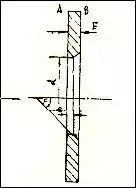
Figure 3-4 Standard hole wrench
Regulations on the use conditions of orifice plates
(1) The tested medium should flow continuously throughout the entire cross-section of the pipeline.
(2) The flow bundle (flow state) inside the pipeline should be stable.
(3) The tested medium should not undergo phase transition when passing through the orifice plate (for example, the liquid should not evaporate, and the gas dissolved in the liquid should not be released), and it should also exist in a single-phase state. For medium with complex components, they can only be used when their properties are similar to those of a single component medium.
(4) When measuring gas (steam) flow rate, the condensate or dust released, or the gas or sediment released when measuring liquid flow rate, shall not accumulate near the orifice plate in the pipeline or in the connecting pipe.
(5) When measuring the flow rate of the medium that can cause blockage of the orifice plate, the heart must be cleaned regularly.
(6) There are no protrusions or visible roughness or unevenness on the 2D inner surface of the pipeline before and after leaving the orifice plate. For standard nozzles. The standard Venturi nozzle and standard Venturi tube are both applicable.
Orifice plates have simple manufacturing processes, easy installation, and low costs. Therefore, it is widely used, but special attention should be paid when using it, especially when measuring the flow rate of corrosive medium and medium containing dust. It is necessary to regularly observe whether the measurement results are accurate to prevent measurement errors caused by corrosion and blockage of the pressure tap, or phenomena that cannot be measured at all. The hole plate should be cleaned during annual maintenance, and if severe corrosion is found, a new hole plate should be replaced immediately.
3、 Differential pressure transmitter
A transmitter is used for detecting production process parameters and for measuring, transforming, and transmitting signals of various industrial process parameters. Among them, differential pressure transmitters are widely used to measure parameters such as flow rate, liquid level, pressure, and density.
Capacitive transmitters use capacitive conversion elements to convert pressure parameters into changes in capacitance, mainly to detect and transmit pressure or differential pressure signals. The transmitter converts the measured parameter into a standard signal: 4-20mA DC output. Its characteristics are high accuracy, small size, good performance, good reliability, long-term stability, and easy adjustment. The general accuracy is 0.25 level.
Working principle of capacitive differential pressure
The measuring part of a capacitive transmitter consists of sensitive components and flange components, with the flange components connected to the measured medium through tapered pipe threads. The flange and sensitive components are clamped with four double headed bolts, divided into high and low pressure chambers, represented by H.L. If blind hole flanges are used in the low-pressure chamber, it constitutes a pressure transmitter; if the low-pressure chamber is vacuum sealed, it constitutes an absolute pressure transmitter.
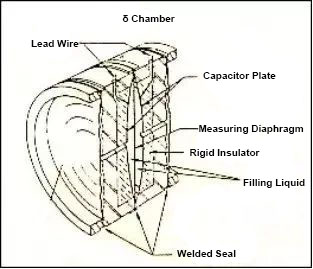
Figure 3-5 shows the measurement part of the capacitive transmitter - δ chamber
The core of sensitive components is the delta chamber (including the inspection circuit board), which is a symmetrical structure composed of identical left and right chambers that form the fixed plates of the differential capacitor. The measuring diaphragm is welded in the middle of the two chambers as the movable plate of the differential capacitor, and the cavities of the two chambers are filled with silicon oil (or fluorine oil) to transmit the measuring pressure. When the measured pressures P1 and P2 act on the isolation membrane, the differential pressure Δ P is transmitted to the measuring membrane through silicone oil, causing a small displacement Δ d and changing the values of the two differential capacitors. The appropriate excitation voltage is applied to the differential capacitor, and the alternating current generated by it is processed by conversion circuits such as rectification, control, and amplification to obtain a 4-20mADC signal proportional to the measured pressure on the transmitter. This is the basic principle of a capacitive differential pressure transmitter.
Operation and maintenance methods
Capacitive transmitters have no mechanical transmission parts, and sensitive components adopt a fully welded structure. The circuit board of the conversion part adopts a plug-in installation, which is sturdy and durable, so it generally does not require major maintenance. If abnormal situations occur, they can be checked from the following aspects:
1. System delivery is too high
Possible reasons and correction methods:
a. Pressure tube: Check the joints and welds on the pressure tube for blockages and leaks. When used in certain chemical medium that are prone to crystallization, special attention should be paid to sediment that may block the pressure tube.
b. Circuit connection: Keep the connectors in the electrical circuit clean and dry regularly, pay special attention to checking the connection of sensitive components, whether the indicator head is open, the power supply voltage, and whether the polarity is correct.
c. Electrical malfunction: After the cause has been investigated, a spare circuit board can be used to replace it. If the malfunction is eliminated, it can be determined as a fault in the circuit and should be replaced and repaired
d. Sensitive components: If faults are found in sensitive components, relevant regulations can be referred to for inspection
2. Low or no system output
Possible reasons and correction methods:
a. Pressure tube: Check if the connection is correct and if there are any leaks or blockages. Check if there is gas in the drainage conduit. Is there any sediment in the flange.
b. Connection of electrical components:
Check for short circuits in the leads of sensitive components. Ensure the cleanliness, reliability, and good insulation of the connectors. Use a good circuit board to inspect, identify the faulty circuit board and replace it.
3. Unstable system output
Possible reasons and correction methods:
a. Check for short circuits, open circuits, and multiple grounding points in the electrical circuit.
b. Can adjusting the damping time and increasing the damping amount eliminate system oscillation.
c. Inspection of the pressure conduit, checking for gas in the liquid pressure conduit. Is there any liquid in the gas pressure tube.
Installation of differential pressure flowmeter
In order for differential pressure flow meters to achieve accurate flow measurement, in addition to correct selection and calculation, it is also necessary to correctly install throttling devices, pressure pipes, and differential pressure transmitters to ensure the correct acquisition, transmission, and indication of signals.
1. The throttle plate should be installed concentric with the pipeline axis and perpendicular to the pipeline axis. The sharp edge of the plate should face the flow direction and should not be installed in reverse.
2. The throttle orifice plate should be installed in the straight pipe section, otherwise the measurement may be inaccurate due to the influence of local resistance such as elbows and valves. The length of the straight pipe before and after the installation of the throttle device can be found in the instrument manual or relevant materials.
3. When measuring liquid flow rate, the pressure measuring hole should be opened in the lower half of the horizontal pipeline, and the differential pressure transmitter should be installed under the orifice plate. When the differential pressure gauge has to be placed above the throttling device, a relief valve should be added at the highest point of the pressure pipe to ensure that there is no gas in the pressure pipe, as shown in Figure 3-6.
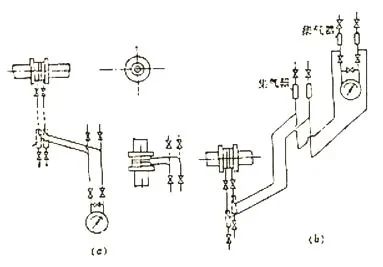
Figure 3-6 Installation method of signal pipeline for measuring liquid flow rate
a) The display instrument is located below the throttle device
b) The display instrument is located above the throttle device with a partition wall in the middle
4. When measuring gas flow, the pressure measuring hole should be opened in the upper half of the pipeline, and the differential pressure transmitter should be installed higher than the orifice plate. When this requirement cannot be met, a condenser and drain valve must be added at the lowest point of the pressure system to ensure that there is no liquid in the pressure pipe. As shown in Figure 3-7.
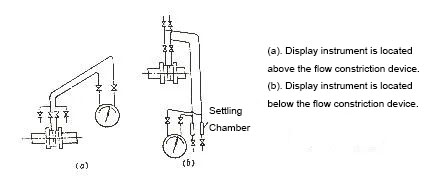
Figure 3-7 Installation method of signal pipeline for measuring gas flow rate
5. When measuring steam flow, the pressure measuring hole should be opened on the horizontal diameter of the pipeline, and a condensing tank must be installed near the pressure hole of the orifice plate. After the steam condenses here, it fills the pressure pipe to separate the differential pressure transmitter from the high-temperature steam, as shown in Figure 3-8.
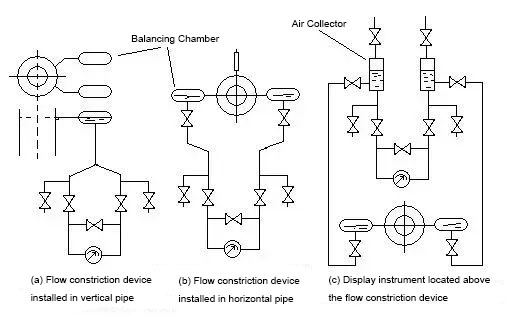
Figure 3-8 Installation method of signal pipeline for measuring steam flow rate
6. When installing a differential pressure transmitter, a "three valve group" must be installed near (usually above) the differential pressure transmitter as shown in Figure 3-9.
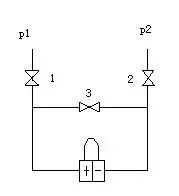
Figure 3-9 Schematic diagram of installation of differential pressure transmitter three valve group
match
When using a three valve group as a differential pressure gauge, two principles must be noted:
① Do not allow the condensed water or isolation liquidmatch inside the pressure pipe to flow away
② Do not subject the measuring element (membrane box or bellows) to pressure or heat
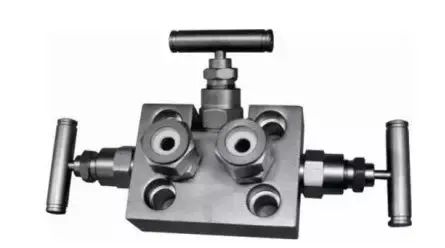
The starting sequence of the three valve group should be: open positive pressure valve 1, close balance valve 2, open negative pressure valve 3. The stopping sequence should be opposite to the above, that is, close negative pressure valve 3, open balance valve 2, and close positive pressure valve 1. This can eliminate the risk of damaging the instrument due to single-phase compression caused by introducing a high voltage into the measurement chamber due to momentary negligence.
Reprint official account: Industrial Control E Station
Mega-tek Instrument Classroom