
Introduction to Explosion proof Grades and Protection Grades of Explosion proof Electrical Equipment
Why explosion-proof
Many production sites produce flammable substances, and about two-thirds of underground coal mines contain explosive substances. In the chemical industry, more than 80% of production workshop areas contain explosive substances. The oxygen required for an explosion is ubiquitous.
The electrical instruments widely used in the production process, various frictional electric sparks, mechanical wear sparks, electrostatic sparks, high temperatures, etc. are inevitable and equivalent to ignition sources.
Therefore, in many industrial sites, when the concentration of explosive substances mixed with oxygen reaches the explosive limit, if there is an ignition source, an explosion will occur. Therefore, it is necessary to adopt explosion-proof measures.
Interpretation of Explosion proof Level
Explosion proof mark format
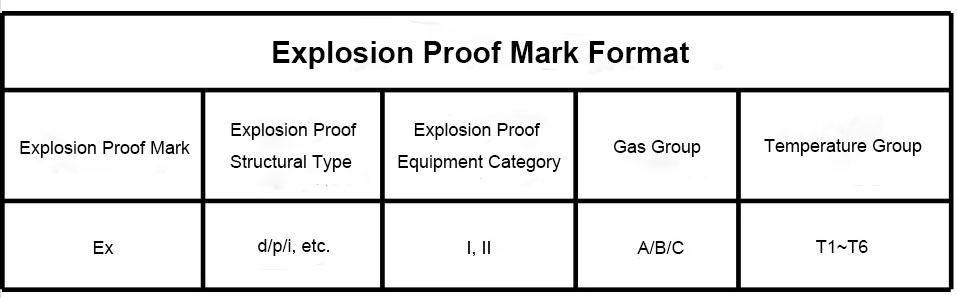
For example:
Ex d Ⅱ C T4
① ② ③ ④ ⑤
01
EX stands for Explosion proof Mark of China and International Electrotechnical Commission

02
It indicates that different types of explosion-proof are applicable in different hazardous locations. D represents explosion-proof type.
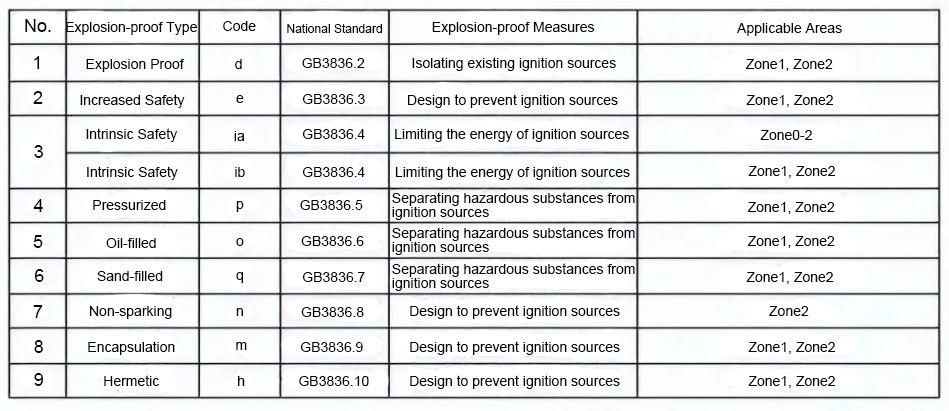
03
I - Electrical equipment for coal mines and underground use
II - Electrical equipment other than coal mines and underground use
04
Classification of Explosive Hazardous Gases
According to the minimum spark energy that may ignite, explosive gases are classified into four hazard levels in China, Europe, and most countries and regions around the world, as shown in the table below:
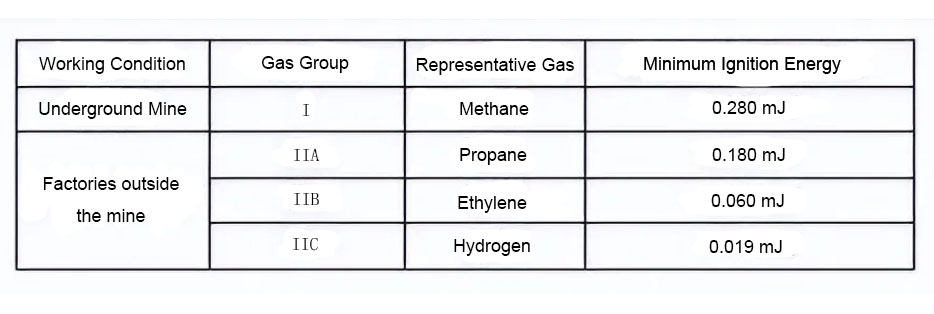
05
Classification of gas temperature groups
Divided into six groups from T1 to T6 according to the highest surface temperature of the equipment, as shown in the following figure:
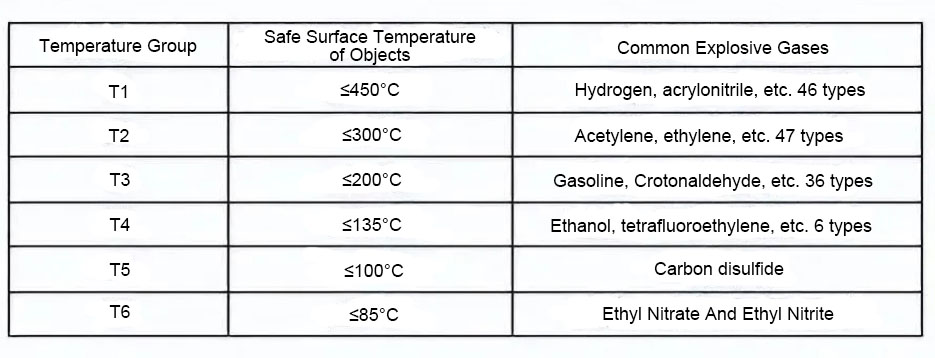
Explosion proof mark for instruments:
The meaning of Ex (ia) Ⅱ C T6:
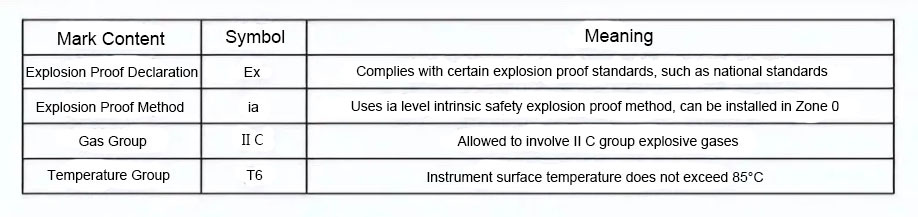
Ex(ia)ⅡC Meaning:
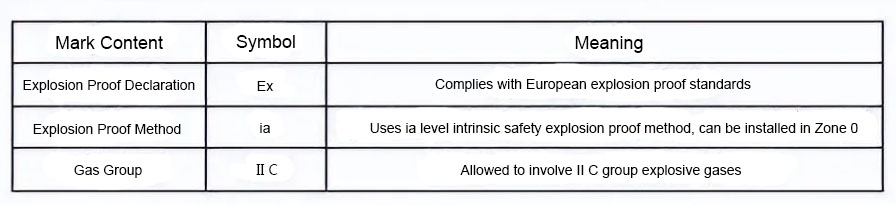
Note: There is no temperature group item in this symbol, indicating that the instrument is not in direct contact with explosive gases.
Composition and meaning of protective signs
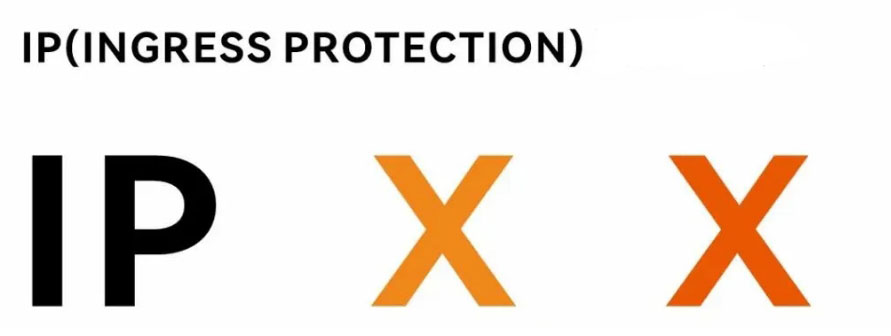
IP protection level
The IP (International Protection) protection level system was drafted by IEC (International Electrotechnical Communication). Classify electrical appliances based on their dust and moisture resistance characteristics.
01
Composition of the logo
The IP protection level is composed of two numbers. The first number represents the level of dust isolation and prevention of foreign objects from entering the electrical appliance. The second number represents the degree of sealing of the electrical appliance against moisture and water intrusion. The larger the number, the higher the protection level.
02
The IP protection category is marked with two numbers:
For example, a protection category: IP XX
Marking letters
The first marked number
The second marker number
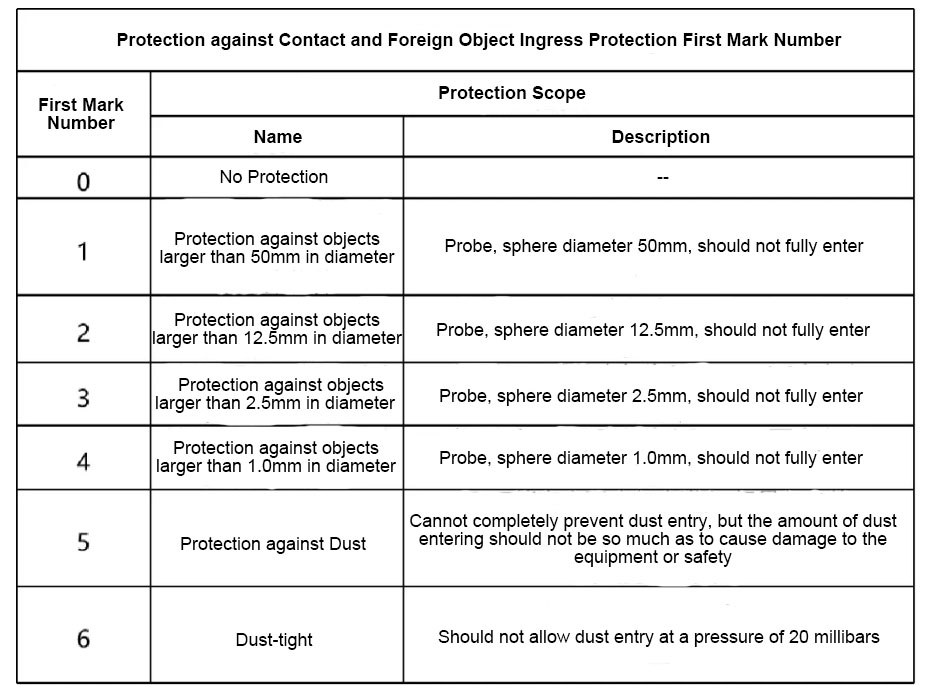
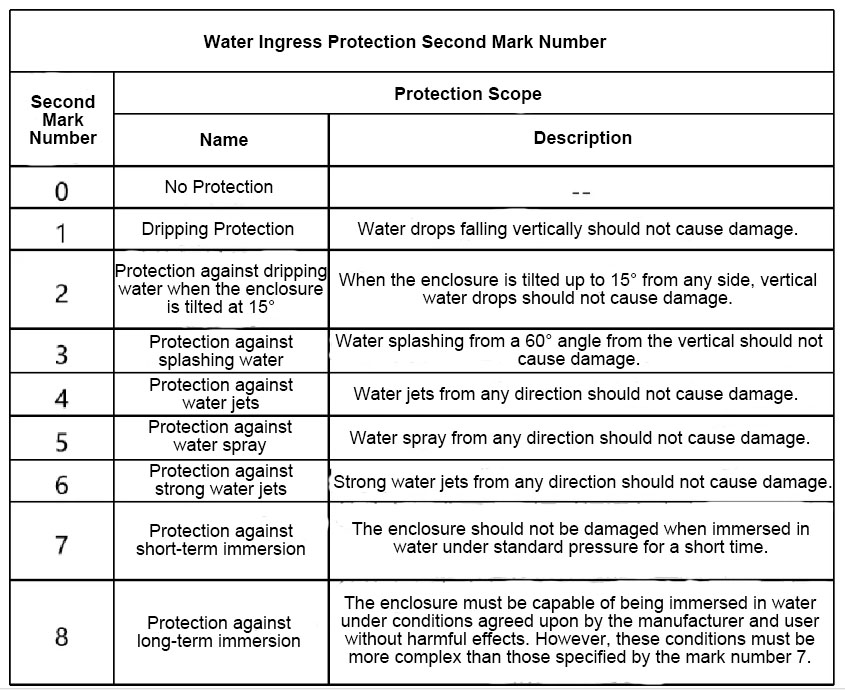
The highest testing level for IP protection is IP68, but the most common claimed levels are IP54, IP55, IP65, IP66, IP67, IP68, etc.
Reprinted from official account: process equipment, instrument and electrical